
What are Competence Centers
Competence Centers, or more precisely High Specialization Competence Centers for Industry, are much more than mere research laboratories or consulting and training entities. They are true public-private ecosystems designed to accompany companies—particularly small and medium-sized enterprises—throughout the entire process of technological and digital transformation. Their approach integrates strategic orientation, specialized training, support for innovation projects, and direct access to cutting-edge technological infrastructures.
Established in 2018 through a national call by the Ministry of Economic Development, these centers were conceived as associations, foundations, or consortium companies that aggregate universities, research centers, accredited laboratories, business associations, and companies. It is precisely this hybrid nature that makes them unique: on one hand, they bring the scientific rigor and advanced skills of the academic world, while on the other, they maintain a constant focus on the concrete needs and real use cases of companies.
The objective of the Competence Centers is to promote a conscious and sustainable adoption of the technologies that characterize Industry 4.0 and increasingly Industry 5.0: from artificial intelligence to advanced robotics, from additive manufacturing to cybersecurity, from digital twins to analytics, up to the Internet of Things and cloud computing. Unlike traditional research centers, they operate with a strongly applicative logic, helping companies test technologies, experiment with solutions, create prototypes, and implement concrete innovations in their production processes.
The Strategic Mission of the Competence Centers
The raison d’être of the competence centers responds to three fundamental needs of the Italian production system, which, despite its globally recognized manufacturing excellence, must face significant challenges in terms of digitalization.
Accelerating technology transfer is the first major mission. Too often in Italy, there is a significant gap between what is developed in university laboratories and what actually reaches the factories. Competence Centers were created precisely to reduce this distance as quickly as possible, providing companies not only with theoretical knowledge but also, through personalized services, pilot lines, equipped laboratories, and specialists capable of transforming an innovative idea into a concrete and sustainable industrial project.
The second mission concerns the development of advanced skills. Digital transformation requires new professional skills and capabilities, often very different from traditional ones. Competence Centers offer structured training paths dedicated to the human capital of the enterprise, ranging from short courses to specialized master’s programs, from “hands-on” laboratory activities to upskilling and reskilling programs tailored to the specific needs of each company. It is not just about theoretical training: the approach is experiential, with a strong emphasis on direct practice and the immediate application of acquired skills.
Finally, the third mission is to concretely support the demand for innovation from companies. Competence Centers accompany companies throughout the entire life cycle of an innovation project: from the initial assessment of digital maturity to the design, implementation, and production of advanced technological solutions. They often manage industrial research and experimental development projects co-financed through national calls, national and regional economic resources, also facilitating collaboration between multiple companies on common challenges.
How Competence Centers Work
Each Competence Center is structured according to an organizational model that combines public-private governance and advanced technological infrastructures. On the governance front, these are partnerships where universities and research entities bring scientific expertise and infrastructures, while companies—from large corporations to SMEs—bring real use cases and concrete needs. This continuous collaboration ensures that the centers’ activities remain always anchored to the actual needs of the market.
The technological infrastructures represent one of the most important assets: pilot lines that simulate real production environments, “demonstration factories” where new processes can be tested, specialized laboratories for additive manufacturing, robotics, IoT, cybersecurity, and artificial intelligence. There are also classrooms and environments dedicated to experiential training, where people do not just listen to lectures but literally get hands-on with real machinery and systems. The motto “test before invest” aptly summarizes this approach: before investing significant amounts, companies can test technologies in a controlled environment, drastically reducing risks.
Making all this possible are multidisciplinary teams involving researchers, engineers, process specialists, industry specialists, project managers, organizational and financial consultants. This variety of skills allows for tackling complex projects that require not only technical know-how but also management capabilities, strategic vision, and understanding of economic-financial aspects.
Moreover, Competence Centers do not operate in isolation: they are part of additional national and international networks, connected with numerous innovation hubs capable of finalizing territorial and European initiatives dedicated to companies and enhancing technology transfer centers. This allows Italian companies to access the best expertise, best practices, and collaboration opportunities that go well beyond national borders.
The Eight Italian Competence Centers
Italy can count on eight Competence Centers officially recognized by MIMIT, each with its own technological specialization and specific industrial sectors of reference. Let’s look at them in detail, starting with CIM.
CIM – Competence for Industry and Manufacturing

CIM (formerly known as CIM4.0) is the national Competence Center dedicated to the digital factory and additive manufacturing, focused on automotive mobility, aerospace defense. Born from the alliance between the Polytechnic University of Turin, the University of Turin, and twenty-one leading companies—including Stellantis, Leonardo, Avio Aero, Siemens, Reply, Iren, TIM, Michelin, and Intesa Sanpaolo—it represents an ecosystem of excellence for the Piedmontese and national manufacturing industry.
CIM supports companies in digital and sustainable transformation by focusing on digital technologies for production processes, additive manufacturing, artificial intelligence applied to process simulation and optimization, and the development of pilot lines to test solutions in real contexts. It stands out particularly for its infrastructures dedicated to additive manufacturing and the digital factory, considered among the most advanced in the national landscape.
BI-REX – Big Data Innovation-Research Excellence
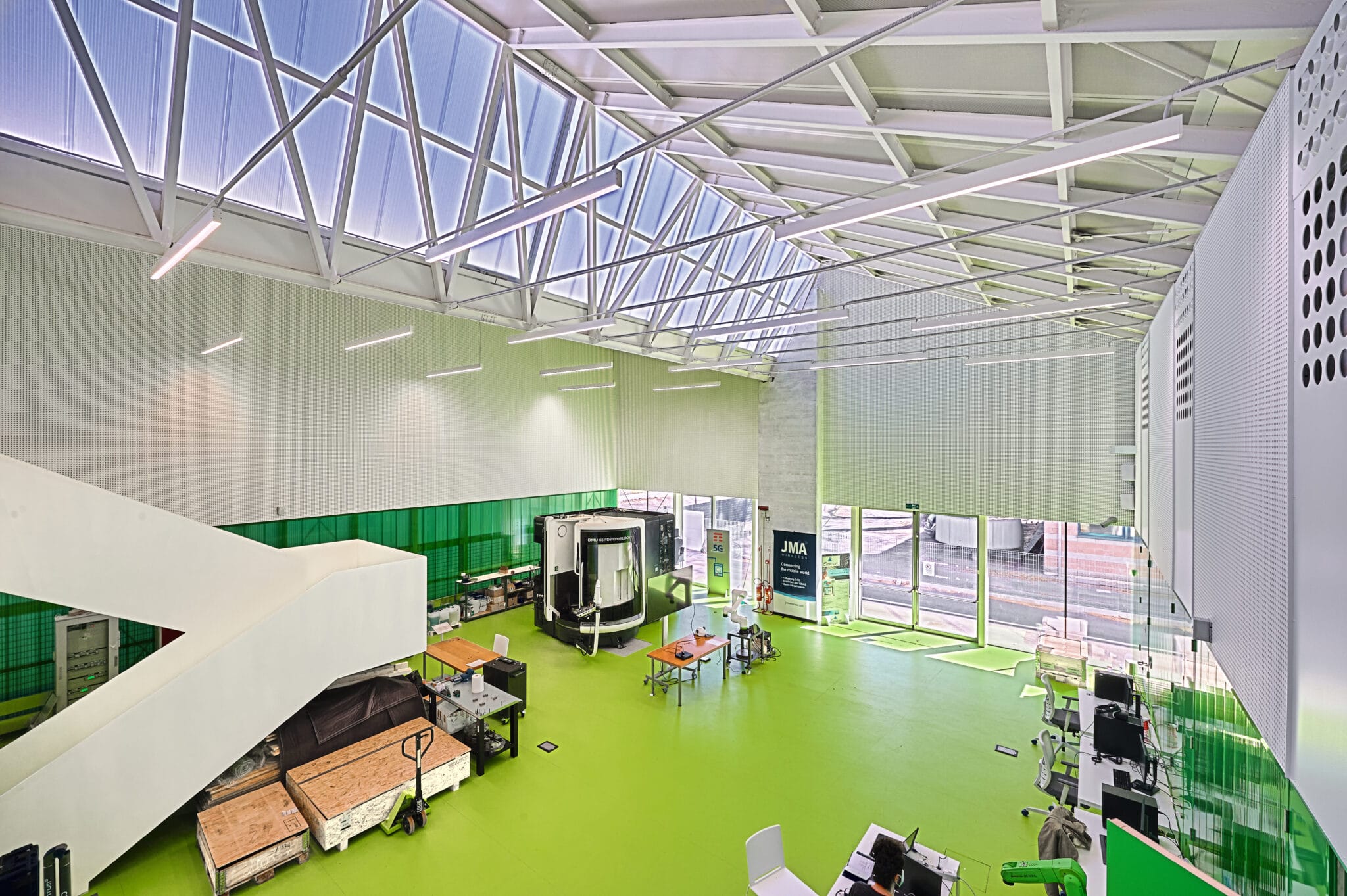
BI-REX is the Italian Competence Center specialized in Big Data and process digitalization in the context of Industry 4.0. Its strength lies in a highly integrated pilot line that combines additive manufacturing, Internet of Things, 5G networks, and advanced data analysis systems. This holistic approach allows companies to work on crucial topics such as predictive maintenance, AI-based quality control, supply chain optimization, and data integration throughout the entire production cycle. For companies looking to turn data into a competitive advantage, BI-REX is an ideal partner.
Made – Competence Center Industry 4.0

MADE has created a true digital and sustainable factory that spans approximately 2,500 square meters, hosting over one hundred technological demonstrators. Companies visiting MADE can see advanced production technologies, automation systems, collaborative robotics in action, and understand practically how to integrate IT/OT systems, artificial intelligence, and MES (Manufacturing Execution System) systems. The focus on sustainability is a distinctive element: MADE develops projects that not only look at production efficiency but also at the environmental and social impact of innovation. It is also one of the main implementing bodies of the PNRR for the digital transition of Italian industry.
ARTES 4.0
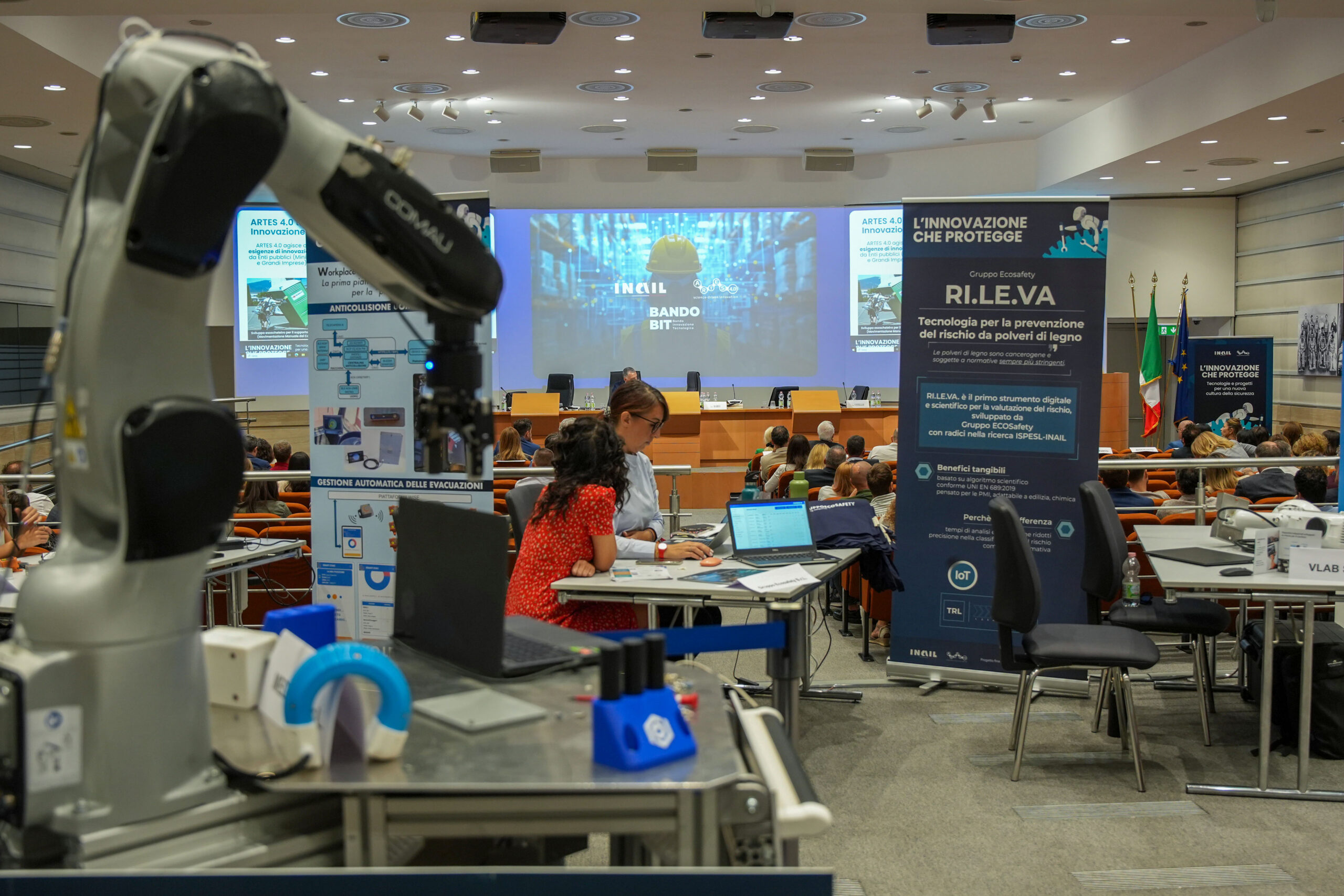
ARTES 4.0 is the national Competence Center dedicated to advanced robotics and enabling digital technologies. Its peculiarity is being a distributed hub, with nodes present in different Italian regions, allowing it to reach the national territory capillarily. ARTES 4.0 works on advanced robotic systems, collaborative automation, artificial intelligence applications, cyber-physical systems, intelligent sensing, and innovative solutions for both the industrial sector and services. The ecosystem includes prestigious institutions such as the Sant’Anna School of Advanced Studies in Pisa and numerous companies from various sectors.
SMACT Competence Center

SMACT is a Competence Center specialized in supporting the digital transformation of companies. The name itself, an acronym for Social, Mobile, Analytics, Cloud, and IoT, describes its technological scope: accompanying organizations in the adoption of enabling technologies and advanced digital models. Established as a consortium company with dozens of members, including important universities and numerous companies, SMACT designs process digitalization services, develops IoT and cloud projects, creates analytics applications for production, and organizes advanced training paths and open innovation initiatives. Its strength lies in the ability to translate innovation into concrete solutions, built on the operational needs of companies and their production contexts.
MedITech – Competence Center Industry 4.0

MedITech is a Competence Center dedicated to 4.0 innovation. The mission is clear: to support the digital transition of companies and Public Administration through digital technologies and advanced production systems, technology transfer projects, and specialized training based on the Teaching Factory I4.0 model. MedITech involves universities and cutting-edge industrial players, creating an ecosystem oriented towards the development of skills, application solutions, and operational models capable of strengthening the competitiveness of production contexts and bridging existing technological and organizational gaps.
START 4.0

START 4.0 has a very particular specialization: the security and optimization of strategic infrastructures. It deals with ports, energy networks, transport networks, water systems, and all those critical infrastructures that represent the backbone of the country’s system. The focus is on safety, security, and cybersecurity of infrastructures, digital twins for advanced monitoring, resilience, and operational continuity. START 4.0 involves companies, SMEs, the Italian Institute of Technology (IIT), port authorities, and other public and private entities engaged in infrastructure innovation. In an era where cyber threats to critical infrastructures are increasingly concrete, the role of START 4.0 becomes crucial for national security.
CYBER 4.0
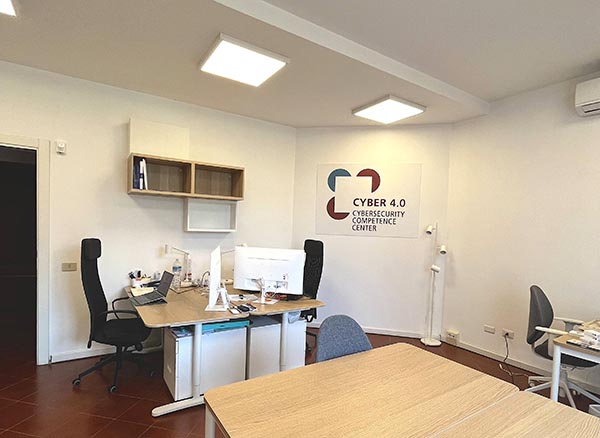
CYBER 4.0 is the national Competence Center entirely dedicated to cybersecurity in all its aspects: technical, organizational, and regulatory. It has developed specialized areas for specific sectors such as automotive, aerospace, e-health, and defense, in addition to a cross-cutting expertise on the security of digital systems for companies and Public Administration. In a context where cyberattacks are increasingly sophisticated and frequent, CYBER 4.0 offers companies the tools to protect their digital assets, train qualified personnel, and develop a culture of cybersecurity that starts from the top of the company.
The Services Offered by Competence Centers
Competence Centers provide companies with an integrated portfolio of services that covers the entire technological transformation journey, from initial analysis to operational implementation.
The first step is typically a digital maturity assessment: a structured evaluation of the company’s level of digitalization that allows for the identification of critical processes, technological gaps, development opportunities, and intervention priorities. From this analysis emerges a specific/personalized technological roadmap. These important activities are often free or offered at very low costs, especially for small and medium-sized enterprises, precisely to raise awareness and lower entry barriers, allowing even smaller entities to approach innovation.
Once the state of the art is understood, technological consulting and strategic orientation come into play. Competence Center experts support companies in choosing the most appropriate technologies, evaluating technical and economic feasibility, and defining sustainable business cases. It is not about selling technology for its own sake, but about helping the company understand which innovation truly makes sense for its specific business context.
For companies that want to experiment before investing significant amounts, Competence Centers offer pilot projects and proof of concept. Companies can test technologies in controlled environments, with expert support, drastically reducing the risks and costs of experimentation. It is a valuable opportunity to understand if a technology can truly bring the expected benefits before committing significant budgets.
When transitioning from experimentation to structured innovation, research and development projects come into play. Competence Centers co-design and manage industrial research and experimental development projects, often funded by national, regional, or European funds. This means that companies can access advanced expertise and costly infrastructure without bearing all the costs alone, benefiting from public co-financing that makes even ambitious projects sustainable.
The aspect of networking and matchmaking should not be underestimated. Competence Centers organize events, workshops, and open innovation sessions that facilitate meetings between companies, discussions on common challenges, and the creation of new technological collaborations. Often, the best innovations arise from the meeting of different realities that decide to tackle a challenge together.
Finally, there is direct access to infrastructure and laboratories: pilot lines, high-tech labs, demo-factories where solutions can be tested, validated, new processes tested, and staff trained on advanced technologies that would be impossible or uneconomical to replicate within a single company.
How to start a collaboration with a Competence Center
The process to start collaborating with a Competence Center is relatively simple and typically involves five phases.
The first step is to identify the most suitable Competence Center for your needs. The choice can be based on technological specialization (if you are looking for expertise in big data, BI-REX might be the natural choice; if you are interested in high specialization for cybersecurity, Cyber4.0 is a reference), sectoral specialization (if you are looking for automotive and aerospace, CIM might be the natural choice), geographical proximity, or a combination of both factors. Each center has a website with detailed information on services, expertise, and contact methods (ours is here).
Once the right center is identified, the next step is the initial contact and assessment. This moment serves to get to know each other: the company shares its challenges and objectives, the Competence Center explains how it can help and often proposes a digital maturity assessment to better understand the starting point. It is an important moment because it lays the foundation for a collaboration that must be built on mutual trust and clarity of objectives.
The next phase is the design of the collaboration, where specific objectives, activities to be carried out, costs (often subsidized or co-financed), timelines, and expected results are defined in detail. In this phase, mutual commitments are put in writing, and a shared work plan is developed.
Then comes the execution of the project, where the company works side by side with technicians, researchers, and specialists from the Competence Center. It is the operational phase, where experimentation, prototyping, staff training, and solution testing take place. The constant support of the center’s experts ensures that the project stays on track and that any difficulties are addressed promptly.
The final phase concerns the valorization of results: the industrialization of developed solutions, their scalability to other business contexts, and possibly the external communication of the results achieved. Successful projects often become case studies that the Competence Center can share (naturally with the company’s consent) to inspire other companies.
Available incentives and funding
One of the most frequently asked questions when discussing collaboration with Competence Centers concerns the costs and possibilities of accessing subsidized funding. The good news is that there are several opportunities.
The calls for proposals from the Competence Centers themselves represent an important initial source of co-financing. Periodically, the centers publish calls to support innovation projects, offering contributions that can cover up to 70% of eligible costs. Conditions vary from center to center and can be integrated with resources from different funding sources. To stay updated, it is advisable to periodically check the website of your Competence Center for active and upcoming calls.
In addition to calls for proposals, subsidized services are now an important tool for supporting companies’ training and technology adoption activities, especially SMEs. This tool allows you to apply a subsidy, from PNRR funds, directly to the cost of the service received from the Competence Centers. Through the respective Competence Centers’ websites, you can learn about the various subsidy percentages applicable to services.
On the fiscal front, companies can benefit from the tax credit for research and development and technological innovation. This is a subsidy that allows for the recovery of a significant percentage of expenses incurred for RD activities and technological innovation, including activities carried out with the consultancy of CCs and investments in 4.0 and green technologies. The maximum amounts vary depending on the type of activity and represent a significant incentive for those investing in innovation.
The tangible benefits for companies
But what does a company that decides to collaborate with a Competence Center actually gain? The benefits can be numerous and significant, although they naturally vary from case to case.
On the economic front, many companies report a reduction in operating costs thanks to process optimization, waste reduction, and more efficient machine maintenance. Improved quality and reduced waste are other frequently cited benefits: technologies such as artificial intelligence applied to quality control or IoT sensors for process monitoring allow for real-time problem identification and correction before they result in defective products.
The increase in productivity is perhaps the most immediate and measurable benefit: automation, robotics, and data-driven decision support systems allow for doing more, better, and in less time. But alongside these quantitative benefits, there are others, perhaps even more important in the medium to long term.
The development of new internal skills represents a strategic asset for the company: it is not just about knowing how to use a new machine, but about developing a different cultural approach, more oriented towards continuous innovation, engagement with new technologies, and experimentation. People who participate in projects with Competence Centers often return to the company with a renewed mindset and become agents of change.
All this translates into a greater market competitiveness: a company that innovates is a company that can differentiate itself, offer better products and services, be more agile in responding to customer demands, and explore new markets with greater confidence.
Competence Centers as a strategic lever for innovation
Competence Centers today represent the most advanced and structured Italian network to support the digital transformation of companies. Their unique model, which combines scientific rigor, academic expertise, industrial know-how, and a strongly applicative approach, makes them a valuable tool for all companies, from large enterprises to SMEs, that want to innovate seriously.
Whether it is implementing new production technologies, training staff on advanced digital skills, starting an industrial research project, testing innovative solutions before significant investments, or simply understanding where to start in their digitalization journey, Competence Centers are the ideal partner to make innovation not only possible but also economically sustainable.
In an increasingly competitive and rapidly evolving economic landscape, where the ability to innovate can truly make the difference between growing or falling behind, knowing and being able to collaborate with Competence Centers becomes a strategic competence for any company that seriously looks to its future.


